
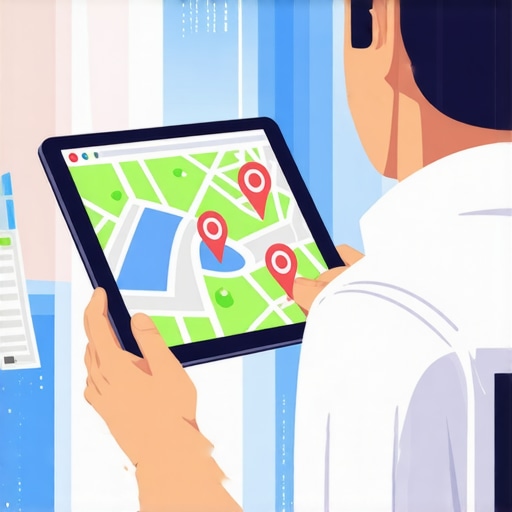
5 Tracking Errors That Make You Think Your Google Maps Rank is Better Than It Is
You’re sitting at your desk, leaning back in your office chair, and you decide to do a quick search. You type your primary service – let’s say “personal injury lawyer” or “emergency plumber” – into Google. There you are. Number one in the Map Pack. You smile, close the tab, and assume your marketing is firing on all cylinders. But then you look at your lead tracking software, and the phone hasn’t rung in three hours. The disconnect is jarring.
As a Google Business Profile Product Expert, I see this daily. Business owners and even some “SEO experts” fall into the ego search trap. They rely on vanity metrics that look great in a monthly PDF report but fail to reflect the cold, hard reality of the local market. The truth is, your google business profile ranking isn’t a single number; it’s a shifting, breathing data point that changes based on a dozen variables you probably aren’t tracking.
If you’ve ever wondered why your reports say you’re winning while your bank account says you’re losing, you’re likely a victim of one of the five tracking errors we’re about to dismantle. Understanding the real reason you can’t get in the top 3 Google Maps spots right now often starts with realizing that where you think you are isn’t where your customers see you. To get real results, you need a sophisticated approach to google business profile seo that accounts for the nuances of local search behavior.
Error #1: The Personalization & Search History Bubble
Google’s primary goal is to provide the most relevant result to the user. To do that, it builds a profile of your preferences, your search history, and your physical habits. If you are the owner or manager of a Google Business Profile (GBP), you likely visit your own website frequently, check your listing, and respond to reviews. Google’s algorithm sees this interaction and concludes: “This user is clearly interested in this specific business.”
This creates a non-incognito search bubble. When you search for your services, Google prioritizes your own business in the results because it knows you have a high affinity for it. This is the ultimate “vanity trap.” You see yourself at the top not because you’ve conquered the algorithm, but because Google is showing you what it thinks you want to see.
Traditional browsers “remember” your preferences through cookies, cached data, and your logged-in Google account. Even if you log out, your IP address often remains linked to your past behavior. If you aren’t using a clean, localized environment to check your rank, you are looking at a distorted version of reality. This is why a professional google maps ranking service uses “clean” requests that strip away personalization to see what a brand-new prospect actually sees. Without this, your google business profile seo efforts are being measured against a biased yardstick.
To break this bubble, you must move beyond simple browser searches. You need to understand that your personal search experience is an outlier, not the average. If you are relying on your own manual searches to judge your success, you are making decisions based on fiction.
Error #2: The “Office Desk” Proximity Fallacy
In the 2026 local search landscape, proximity is the undisputed king of ranking factors. Google’s “Neural Matching” and “Vicinity” updates have made the Map Pack incredibly hyperlocal. This leads to what I call the “Office Desk Fallacy.”
If you are searching for your business while sitting inside your business, your proximity is zero feet. Of course you rank #1. You are the closest possible relevant result to yourself. However, the moment a potential customer searches from a neighborhood just three miles away, the “Proximity Filter” kicks in. Because Google wants to show the most convenient option, your ranking can drop from #1 to #15 in the span of a few city blocks.
Many business owners fail to realize that their visibility is often a tiny “island” around their physical location. You might dominate your parking lot, but you are invisible to the high-value suburbs ten minutes away. To fix this, you must perform a 5-step audit of your Google Maps presence to see how your rank decays as distance increases.
Relying on a gmb ranking service that only checks your rank from a single point (your business address) is a recipe for failure. You need to know how you rank where the customers are, not where your desk is. Real google business profile optimization involves expanding your “proximity radius” so that you remain in the top 3 even as the user moves further away from your front door. If your tracking doesn’t account for this geographic decay, your data is functionally useless.
Error #3: Desktop vs. Mobile Discrepancy
One of the most common technical oversights in local SEO is the failure to distinguish between desktop and mobile search environments. Most business owners and marketing managers monitor their rankings from a desktop computer. However, the vast majority of local intent searches – “plumber near me,” “best pizza nearby,” “lawyer open now” – happen on mobile devices.
The discrepancy between these two platforms is massive because they use different methods to determine location:
- Desktop: Primarily uses IP address geolocation. This is notoriously inaccurate and can often place a user’s “location” at a service provider node several miles away from their actual building.
- Mobile: Uses a combination of GPS triangulation, Wi-Fi network data, and cellular towers. This is accurate within a few meters.
Because mobile search is so much more precise, the Map Pack results are often completely different than what you see on a desktop. Mobile results also prioritize “Near Me” and “Open Now” signals much more heavily. If your local seo software isn’t specifically emulating mobile GPS coordinates, you are missing the reality of how 80% of your customers find you.
Furthermore, mobile search results often include different “justifications” – those small snippets of text that say “Their website mentions [keyword]” or “Review mentions [keyword].” These are critical for conversion but often appear differently on mobile interfaces. If you aren’t analyzing what local competition analysis reveals about your visibility on mobile, you are only seeing half the picture. To truly rank higher on google maps, your tracking must be mobile-first.
Error #4: Single-Point Tracking vs. Geo-Grid Reality
If your current SEO provider sends you a spreadsheet that says “Keyword: [Your Service] | Rank: #2,” you should be very skeptical. In local SEO, a single rank number is an obsolete metric. It is a relic of traditional organic SEO that has no place in a map-based ecosystem.
As we discussed with proximity, your rank changes based on the user’s latitude and longitude. A single-point tracker only tells you how you rank at one specific set of coordinates. This is like trying to judge the weather for the entire United States by looking out one window in Chicago. It doesn’t work.
The modern standard for tracking is the Geo-Grid. A geo-grid is a map overlay that shows your ranking at dozens of different points across your service area. It looks like a field of colored dots (usually green for top 3, yellow for 4-10, and red for 10+).
A geo-grid might show that you are #1 directly over your office, but as soon as you cross the highway into the next zip code, you drop to #8. This visualization is the only way to see the “holes” in your visibility. It allows you to see exactly where a competitor is “stealing” your leads. This is why using a dedicated google maps rank tracker is non-negotiable for any serious business.
Without a grid, you can’t implement a google business profile optimization strategy that actually moves the needle. You might be spending money to improve a keyword where you already rank #1 for 90% of the city, while ignoring a keyword where you are #4 (just outside the Map Pack) and could easily jump to #2 with a little effort. Grid-based local seo ranking tools are the difference between guessing and knowing. They show you the “battleground” of your local market in high definition.
Error #5: Confusing Organic “Blue Links” with the Map Pack
This is a fundamental misunderstanding of how Google works. There are two distinct algorithms at play in a local search result: the Local Map Pack algorithm and the Web Organic algorithm (the “blue links” below the map).
Many tracking tools report your organic position but label it as your “Google Maps rank.” It is entirely possible – and actually quite common – to rank #1 in the organic blue links but not even appear in the top 10 of the Map Pack. Conversely, you can be #1 in the Map Pack while your website is on page 3 of the organic results.
The factors that drive these two rankings are different:
- Organic Rank: Driven by backlinks, domain authority, technical SEO, and site-wide content.
- Map Pack Rank: Driven by GBP profile completeness, proximity, review velocity, local citations, and “local justifications.”
If you are focusing all your energy on traditional on-page SEO, you are playing the wrong game for Map Pack dominance. I’ve seen businesses spend thousands on high-quality backlinks only to see zero movement in their Map Pack visibility because their GBP was poorly optimized or lacked local relevance. This is why a targeted local SEO content strategy must be specifically designed to feed the Map Pack algorithm, not just the organic one.
When you look at your reports, make sure you are seeing a clear distinction between these two. If your google business profile seo isn’t being tracked separately from your website’s organic SEO, your data is being “smudged,” and you likely have significant blind spots in your lead generation pipeline.
The Solution: How to Track Like a Pro
Stop settling for vanity metrics and “ego searches.” If you want to actually grow your business, you need to treat your local data with the same rigor as your financial statements. Real visibility requires a professional-grade google business profile audit tool that provides a multi-point, grid-based view of your market.
You need to know how you rank on mobile, how you rank five miles away, and how you rank compared to the guy three blocks over who is currently taking your calls. You need to understand how to see exactly why local competitors outrank you by looking at their proximity and review patterns, not just their meta tags.
The local search market is more competitive than ever. Don’t let a “green” report hide the fact that your business is invisible to the majority of your potential customers. Use the right local seo tools, demand better reporting from your agency, and stop falling for the proximity traps that keep your phone silent. If you suspect your current reporting is a “total scam,” you are probably right – especially if you’re dealing with corporate vendors who prioritize volume over accuracy.
It’s time to stop guessing and start dominating. Use SEO Viper Tools to get the ground-truth data you need to fix your google business profile ranking and start winning the Map Pack for real.